
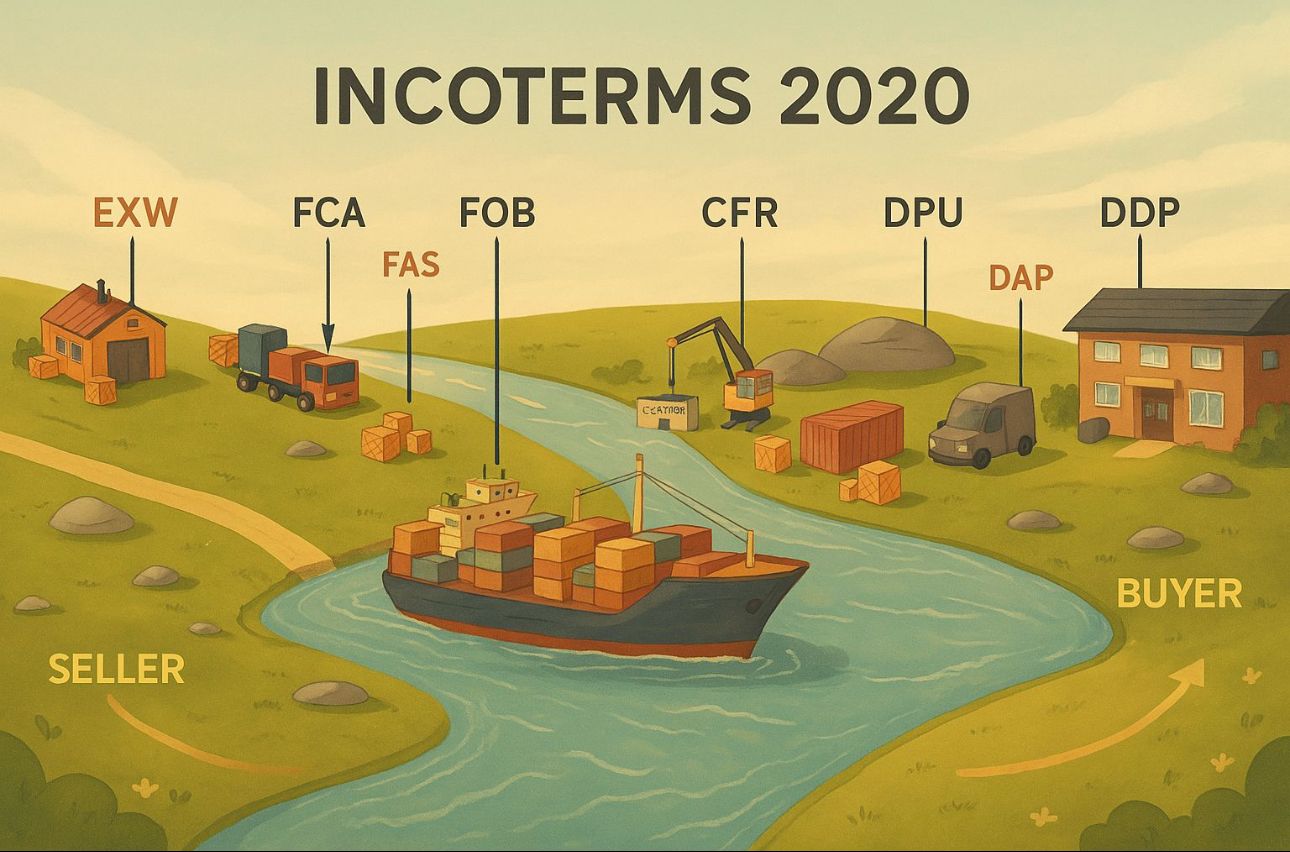
When importing products from China, price negotiations often get most of the attention. However, many costly mistakes happen after the price is agreed—because importers misunderstand Incoterms. In 2026, with rising logistics costs, stricter customs regulations, and complex global supply chains, understanding Incoterms is no longer optional. It is essential.
Incoterms define who is responsible for shipping costs, insurance, customs clearance, and risk at each stage of the shipment. Choosing the wrong Incoterm can turn a profitable deal into a financial loss, even when working with a reliable supplier.
This guide explains what Incoterms are, how they work, and which ones importers should use when buying from China, so you can avoid surprises, disputes, and unnecessary expenses.
What Are Incoterms?
Incoterms (International Commercial Terms) are standardized trade rules published by the International Chamber of Commerce (ICC). They are used worldwide to clearly define the responsibilities of buyers and sellers in international transactions.
Each Incoterm specifies:
- Who pays for transportation
- Who bears the risk at each stage
- Who handles export and import customs
- Who pays for insurance (if applicable)
As of 2026, the most commonly used version is Incoterms® 2020, which remains valid until the ICC releases a newer update. Unless stated otherwise in your contract, Incoterms 2020 should always be referenced explicitly.
Why Incoterms Are Critical When Importing From China
Many first-time importers assume that the supplier’s quoted price includes everything. This is one of the most common—and expensive—mistakes.
Misunderstanding Incoterms can lead to:
- Unexpected shipping or port fees
- Delays at customs
- Cargo held at destination ports
- Paying twice for the same service
- Disputes over damaged or lost goods
When buying from China, Incoterms determine where the supplier’s responsibility ends and yours begins. Knowing this in advance allows you to calculate your true landed cost accurately.
The 11 Incoterms Explained (Buyer’s Perspective)
Incoterms are divided into groups based on the level of responsibility transferred from seller to buyer.
Group E: Departure
EXW – Ex Works
Seller responsibility: Minimal
Buyer responsibility: Almost everything
Under EXW, the seller makes the goods available at their factory or warehouse. The buyer is responsible for:
- Pickup
- Export customs clearance
- International shipping
- Insurance
- Import customs
- Final delivery
Why EXW Is Risky in China
EXW is often misunderstood. In practice, foreign buyers cannot legally handle export customs clearance in China without a licensed exporter. This often leads to hidden costs or reliance on third parties.
Best for: Experienced importers with a local agent in China
Not recommended for: Beginners
Group F: Main Carriage Unpaid
FOB – Free On Board (Most Popular for China)
Seller responsibility: Until goods are loaded on the vessel
Buyer responsibility: From that point onward
FOB is the most commonly used Incoterm when importing from China. The supplier handles:
- Export customs clearance
- Delivery to the port
- Loading onto the ship
The buyer handles:
- Ocean freight
- Insurance
- Destination charges
- Import customs
- Final delivery
Why FOB Is Ideal
FOB gives buyers control over shipping costs while keeping suppliers responsible for export formalities.
Best for: Most importers, especially for sea freight
FCA – Free Carrier
FCA is similar to FOB but more flexible. The seller delivers goods to a carrier or location chosen by the buyer.
Best for: Air freight or container consolidation
More precise than FOB for modern logistics
Group C: Main Carriage Paid
CIF – Cost, Insurance, and Freight
Under CIF, the supplier pays for:
- Export clearance
- Ocean freight
- Minimum insurance
Risk transfers to the buyer once goods are loaded on the ship, not at destination.
Common Misconception
Many importers believe CIF means “delivered to my port with no extra cost.” This is false.
At destination, buyers often face:
- High port handling fees
- Uncontrolled local charges
- Limited transparency
CIF Pros
- Simplicity
- Supplier manages shipping
CIF Cons
- Higher hidden costs
- Less control over freight
CFR – Cost and Freight
Similar to CIF, but without insurance. Risk still transfers at the port of origin.
Rarely recommended, as buyers still lack control but must arrange insurance separately.
Group D: Arrival
DAP – Delivered At Place (Very Popular in 2026)
DAP means the seller delivers goods to a named destination (e.g., your warehouse), excluding import duties and taxes.
Seller handles:
- Export customs
- International freight
- Destination delivery
Buyer handles:
- Import customs
- Duties and taxes
Why Importers Like DAP
- Predictable costs
- Simplified logistics
- Ideal for e-commerce and SMEs
DAP is increasingly popular in 2026 due to door-to-door shipping solutions and digital customs processing.
DDP – Delivered Duty Paid
DDP means the seller handles everything, including:
- Export customs
- Freight
- Import customs
- Duties and taxes
- Final delivery
Sounds perfect—but be careful
Why DDP Is Risky
- Foreign suppliers may illegally act as importer
- Incorrect tax declarations
- No visibility into duties paid
- Legal liability may still fall on you
Best for: Very small shipments or courier-based deliveries
Not recommended for: Large or regulated imports
Incoterms and Risk Transfer: What Importers Must Understand
A critical point many importers miss: cost and risk transfer are not the same thing.
For example:
- Under CIF, the seller pays freight and insurance
- But risk transfers once goods are loaded on the ship
This means if cargo is damaged at sea, the buyer must claim insurance—even though the seller paid for it.
Understanding this distinction prevents disputes and uncovered losses.
Choosing the Right Incoterm When Buying From China
Best Incoterms by Importer Type
Beginner Importers
- FOB (sea freight)
- DAP (door-to-door)
Experienced Importers
- FOB
- FCA
E-commerce & Small Shipments
- DAP
- DDP (with caution)
Large Commercial Shipments
- FOB with your own freight forwarder
Incoterms and Freight Forwarders: A Critical Relationship
In 2026, freight forwarders play a key role in cost control and compliance.
If you choose:
- FOB: Your forwarder manages international shipping
- DAP/DDP: Supplier’s forwarder controls logistics
Pro Tip
Even under DAP or CIF, ask for a full cost breakdown to avoid surprise destination charges.
Common Incoterm Mistakes Importers Make
🚩 Assuming CIF includes destination fees
🚩 Using EXW without export capability
🚩 Not specifying Incoterms version (e.g., Incoterms® 2020)
🚩 Choosing DDP without understanding tax liability
🚩 Letting suppliers choose Incoterms for you
How to Write Incoterms Correctly in Contracts
Always specify:
- Incoterm name
- Named place or port
- Incoterms version
Correct example:
FOB Shanghai Port – Incoterms® 2020
Never leave Incoterms vague or implied.
Incoterms and Total Landed Cost
To calculate true profitability, importers must include:
- Product cost
- Freight
- Insurance
- Customs duties
- Taxes
- Port and handling fees
- Local delivery
Incoterms determine which of these costs you control and which are bundled into the supplier price.
Final Thoughts: Incoterms Are a Strategic Decision
In 2026, Incoterms are more than shipping terms—they are a risk management and cost control tool. The right Incoterm can:
- Improve cash flow
- Reduce disputes
- Increase supply chain transparency
- Protect your margins
The wrong one can do the opposite.
Successful importers don’t ask, “Which Incoterm is cheapest?”
They ask, “Which Incoterm gives me the most control and clarity?”